How to Make the Best Aesthetic Dandelion Jelly: A Complete Step-by-Step Guide
Published:
Updated:
Author:
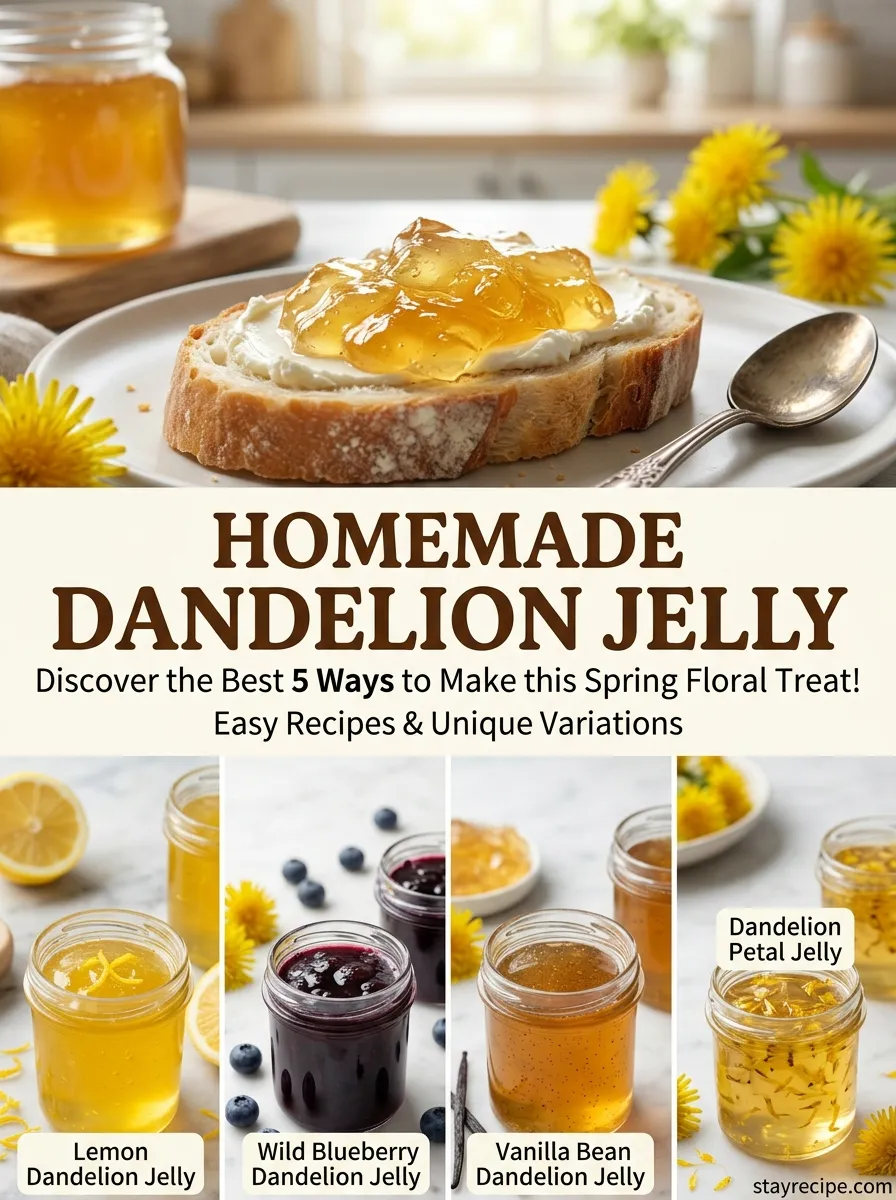
Introducing whimsical floral preserves! Dandelion jelly is the real foraging hidden gem. If you’ve ever eyed a field of yellow weeds and thought, Hmm, I wonder if they’re useful good news. This jelly reminds me of a sunny afternoon; it has a light, honey-like flavor with mild citrus notes. It is a healthy, sustainable alternative to commercially made jams, drawn from the natural vigor of wilder-harvested petals.
This comprehensive guide is built for the modern kitchen be it a quick and easy weekend task, or something pretty to fill your pantry. Unlike traditional canning, which can seem intimidating, our step-by-step method is foolproof even if you’ve never pickled before. Our emphasis is on the “why” and “how” of that process, from choosing the best blooms to how you make sure it’s such a perfect set. Not only is it essential for any food lover, but it also perfectly slots into a diet-specific lifestyle in search of natural and unprocessed ingredients. Buckle up, because you’ll be turning your backyard “weeds” into glorious golden spreads to wow friends and family.
Our Best one Aesthetic Dandelion Jelly recipe Classic Dandelion Jelly
Ingredients
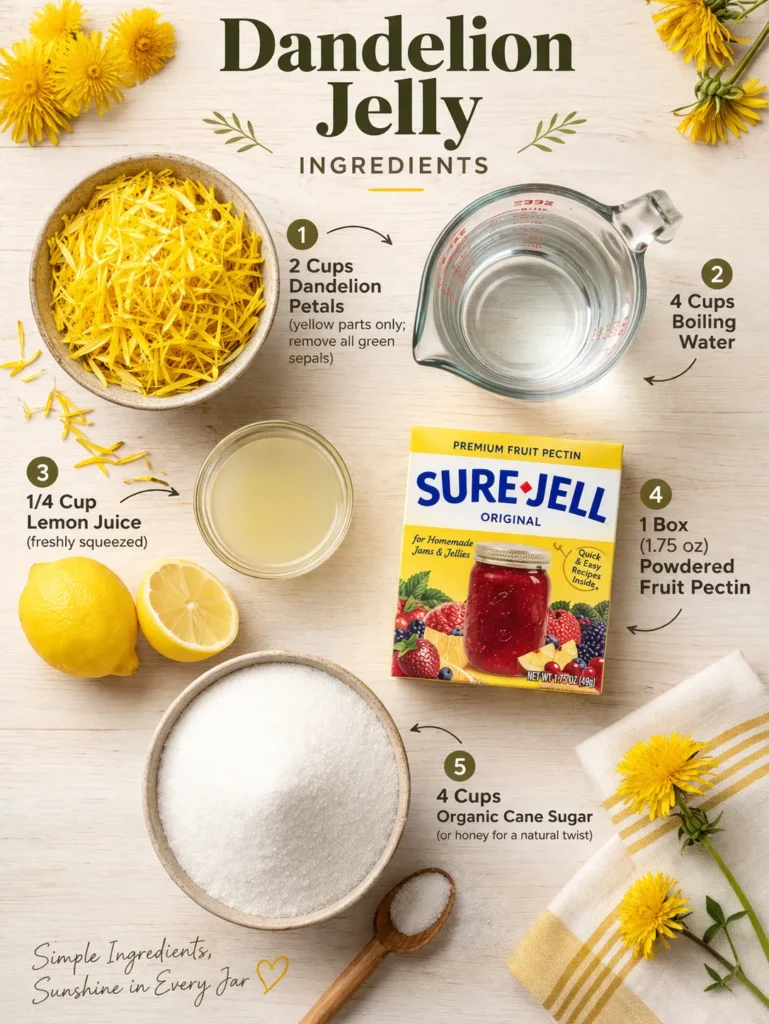
- 2 Cups Dandelion Petals (yellow parts only; remove all green sepals)
- 4 Cups Boiling Water
- 1/4 Cup Lemon Juice (freshly squeezed)
- 1 Box (1.75 oz) Powdered Fruit Pectin
- 4 Cups Organic Cane Sugar (or honey for a natural twist)
Step-by-Step Instructions
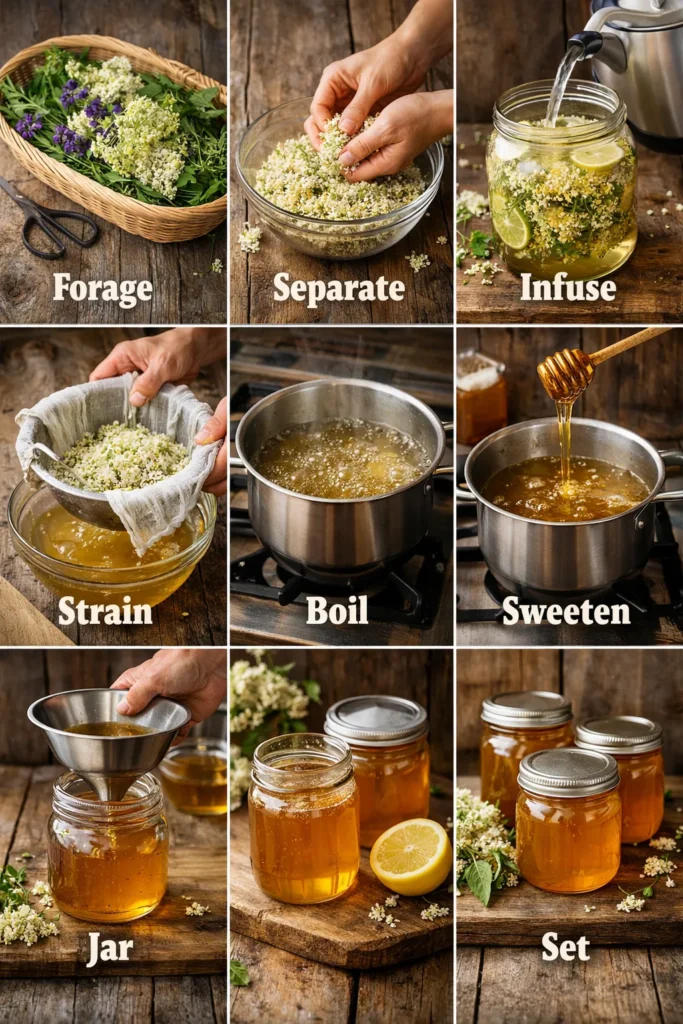
- Forage: Harvest about 4–5 cups of dandelion heads from a clean, pesticide-free area.
- Separate: Pull the yellow petals away from the green base. This is the most important step—green parts make the jelly bitter!
- Infuse: Pour boiling water over the petals and let them steep for at least 2 hours (or overnight in the fridge) to create a “tea.”
- Strain: Use a cheesecloth to strain the liquid, squeezing out every drop of dandelion essence.
- Boil: Place the liquid in a large pot, stir in lemon juice and pectin, and bring to a rolling boil.
- Sweeten: Add the sugar all at once. Stir constantly and boil hard for 1–2 minutes.
- Jar: Ladle the hot jelly into sterilized jars, leaving 1/4 inch headspace.
- Set: Let the jars sit undisturbed for 24 hours to firm up.
Top 10 Dandelion Jelly Variations
1. Lemon Dandelion Jelly
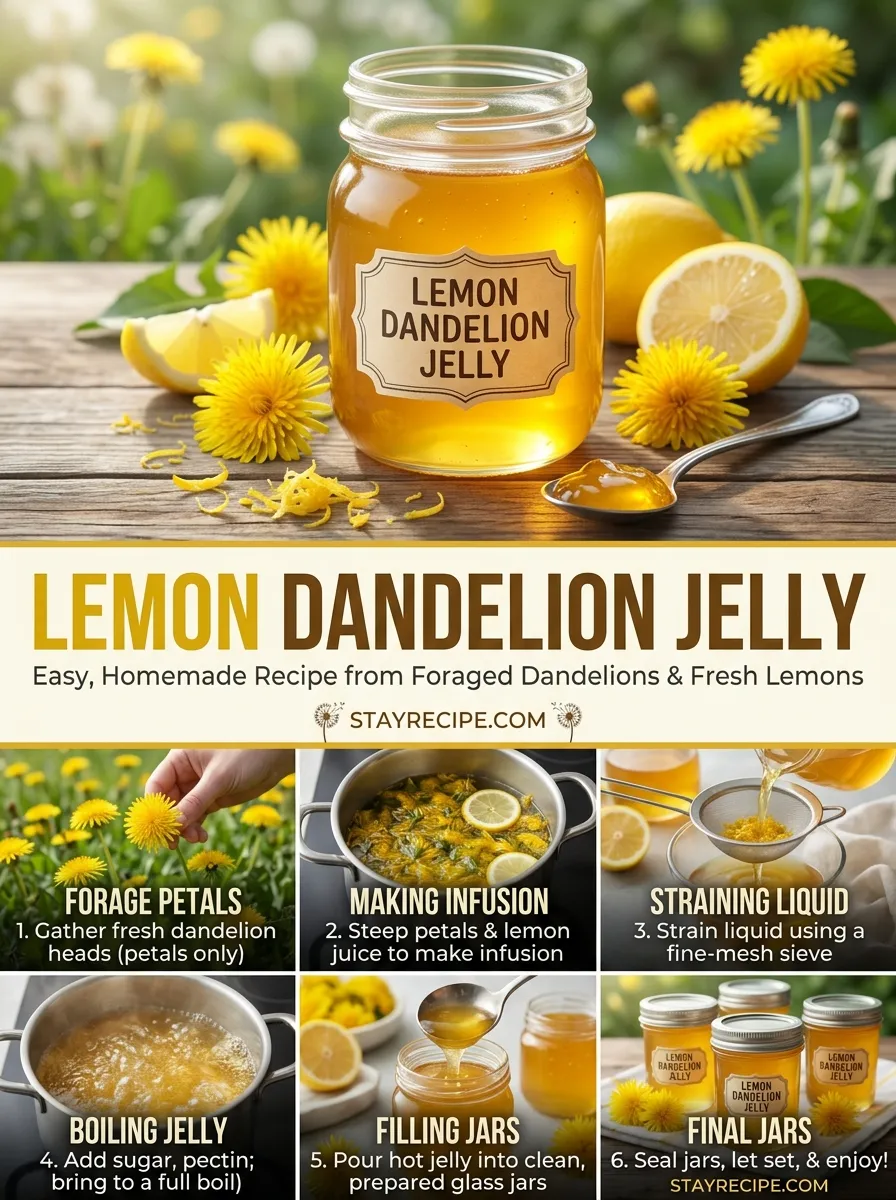
Ingredients:
- 2 cups dandelion tea (petals steeped)
- 2 tbsp lemon juice
- 2 cups sugar
- 1 packet pectin
Steps:
- Boil dandelion tea + lemon juice
- Add pectin, stir well
- Add sugar, boil 1–2 mins
- Pour into jars, cool & set
2. Wild Blueberry Dandelion Jelly
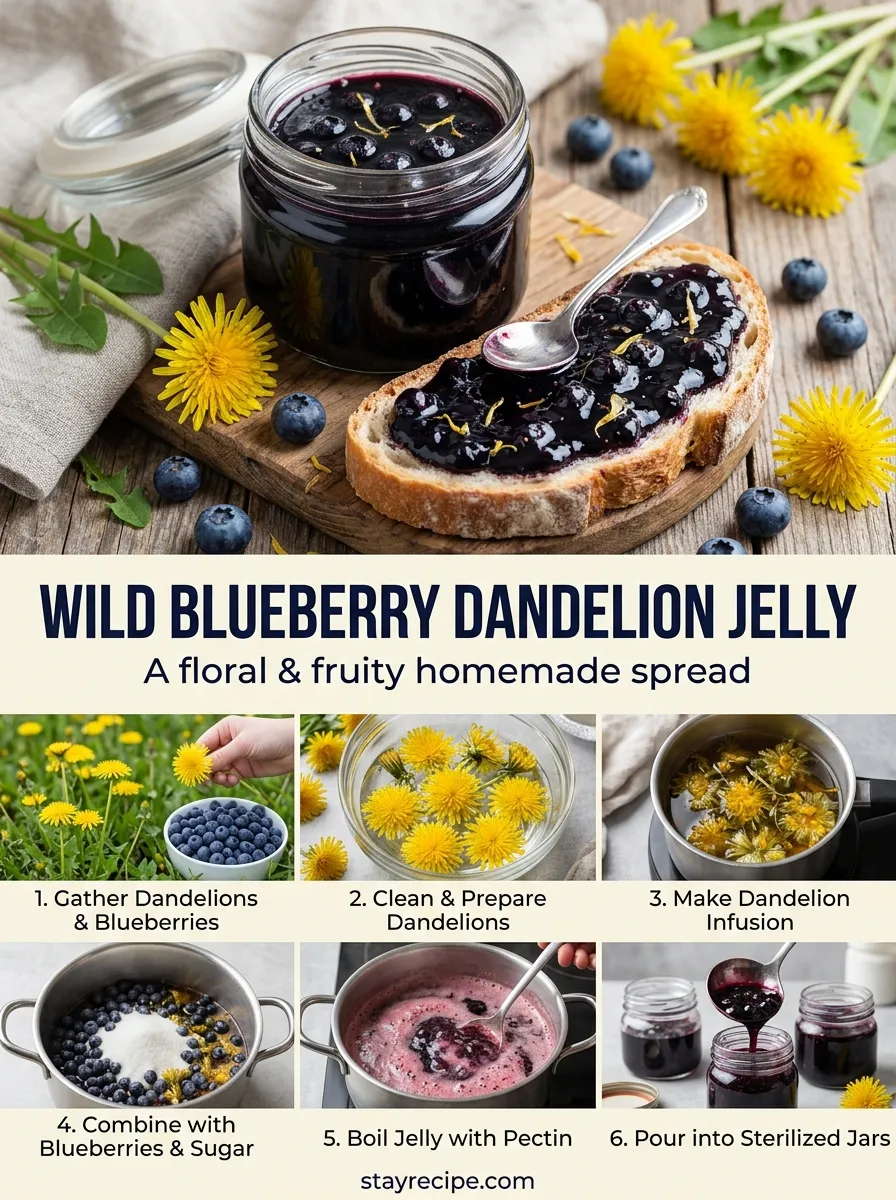
Ingredients:
- 1½ cups dandelion tea
- ½ cup blueberry puree
- 2 cups sugar
- 1 packet pectin
Steps:
- Mix tea + blueberry puree
- Bring to boil
- Add pectin + sugar
- Boil, jar, and cool
3. Vanilla Bean Dandelion Jelly
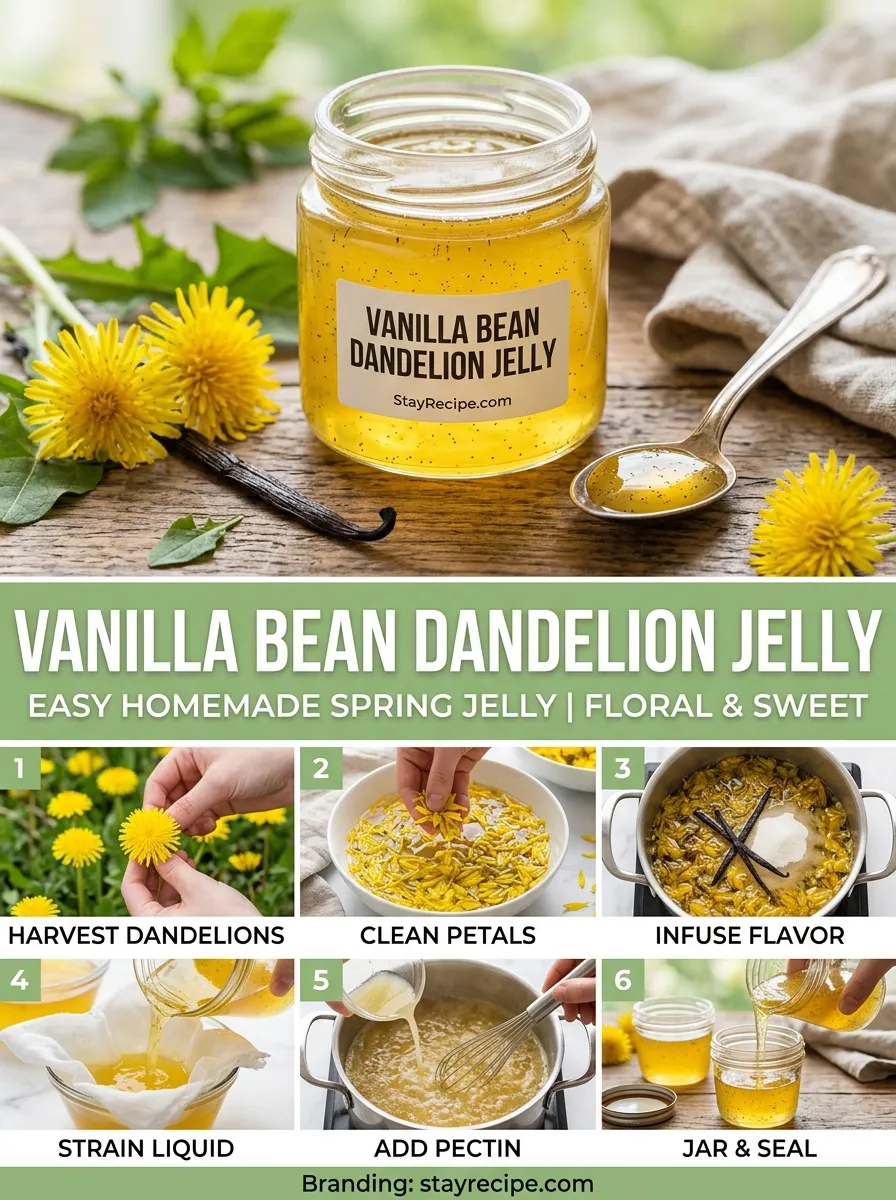
Ingredients:
- 2 cups dandelion tea
- 1 vanilla bean (or 1 tsp extract)
- 2 cups sugar
- 1 packet pectin
Steps:
- Heat tea + vanilla
- Add pectin
- Stir in sugar, boil
- Pour into jars
4. Dandelion Petal Jelly (Classic)
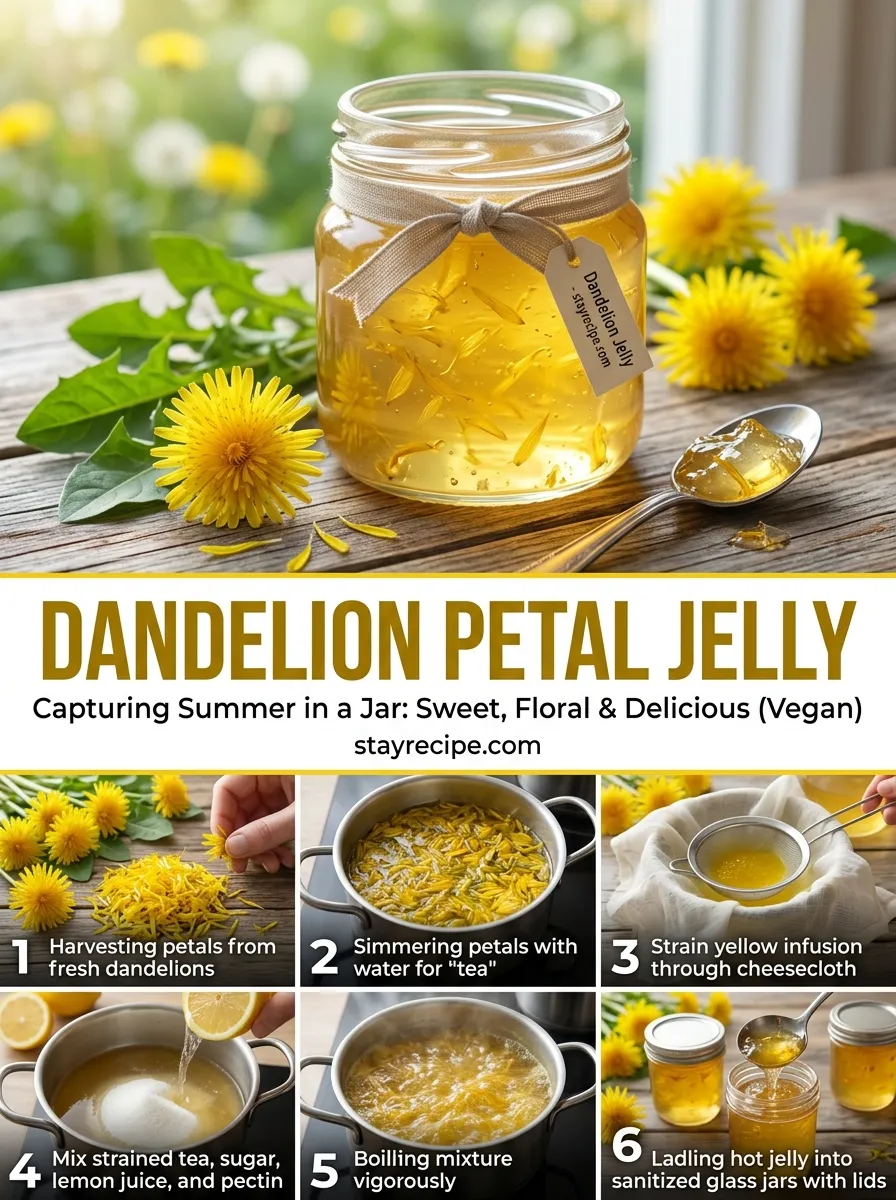
Ingredients:
- 2 cups fresh petals (no green parts)
- 2 cups water
- 2 cups sugar
- 2 tbsp lemon juice
- 1 packet pectin
Steps:
- Steep petals in hot water → strain
- Add lemon juice + pectin
- Boil, then add sugar
- Jar and cool
5. Petal Infused Jelly (Floral Blend)
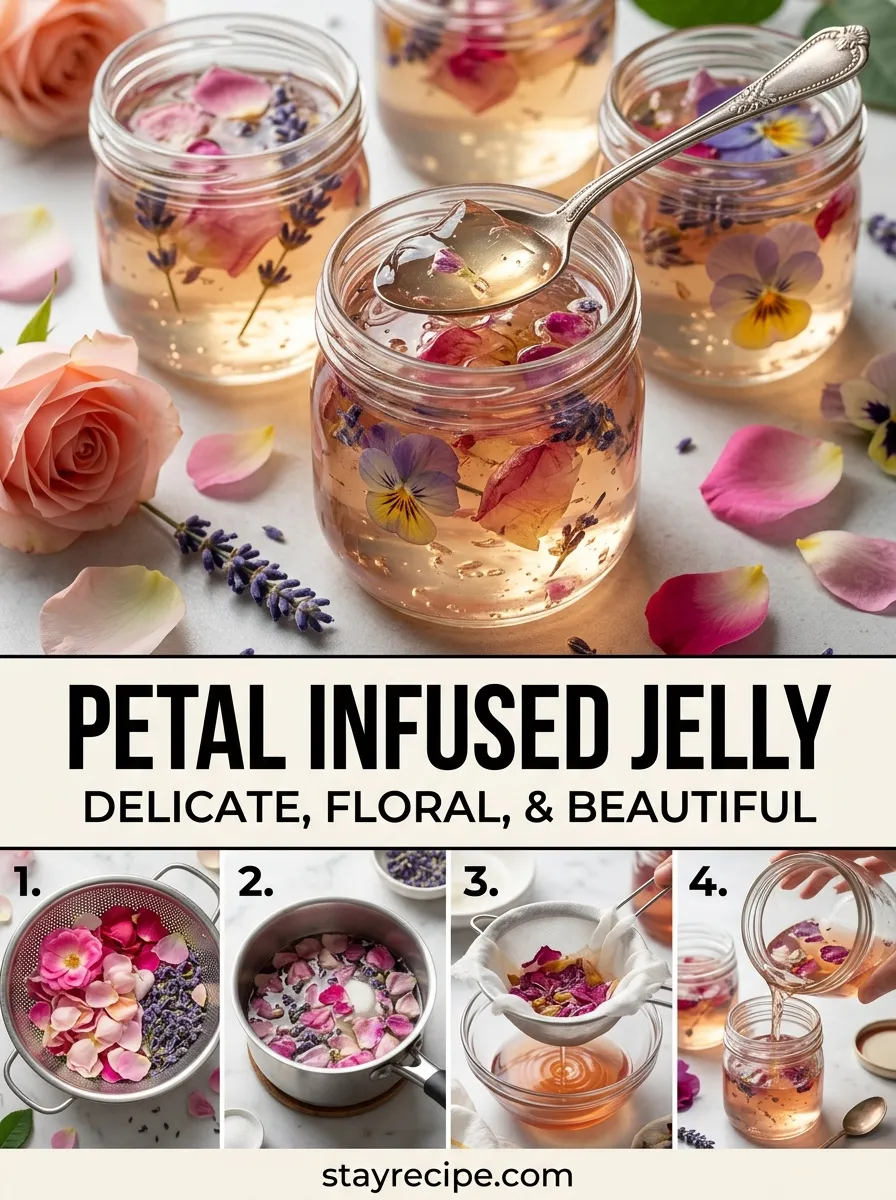
Ingredients:
- Dandelion + rose petals mix
- 2 cups water
- 2 cups sugar
- 1 packet pectin
Steps:
- Steep mixed petals
- Strain liquid
- Add pectin + sugar
- Boil and jar
6. Honey & Mint Dandelion Jelly
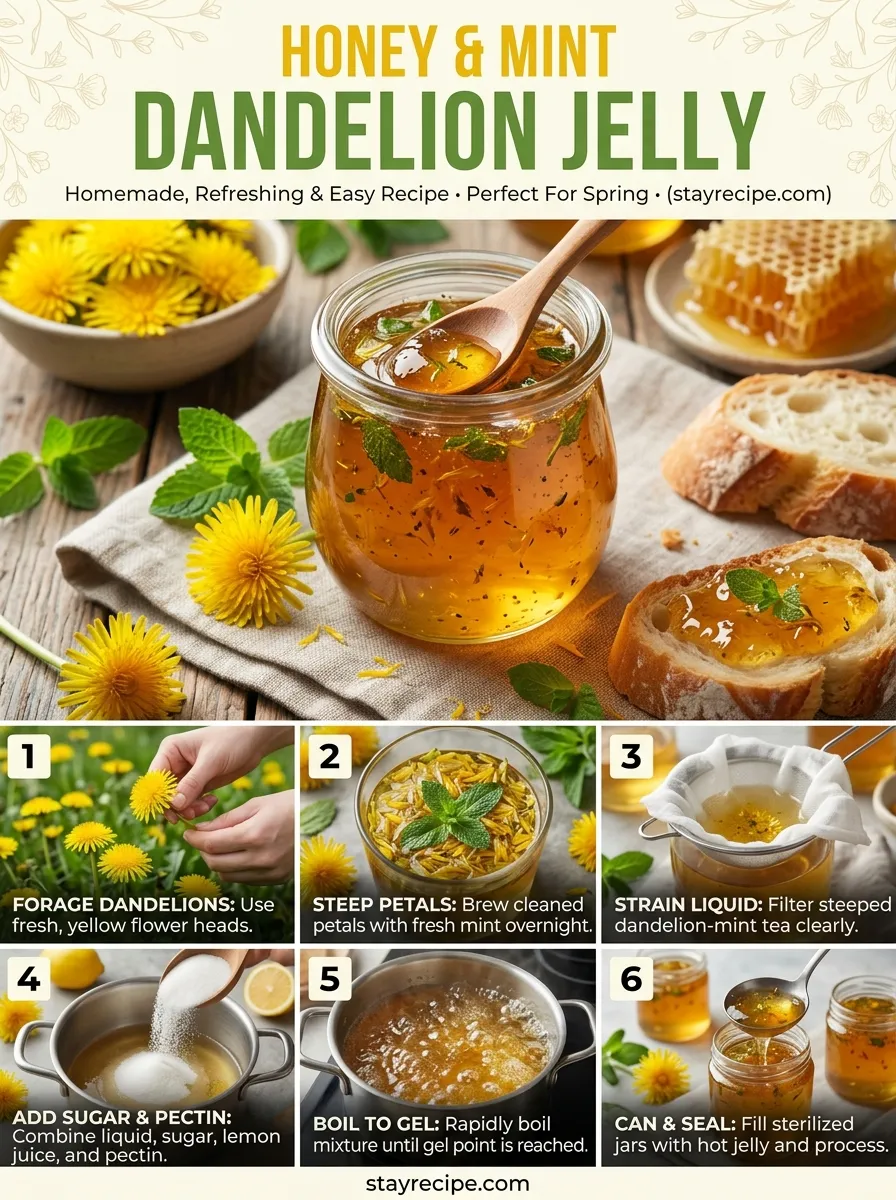
Ingredients:
- 2 cups dandelion tea
- ¼ cup honey
- Fresh mint leaves
- 1½ cups sugar
- 1 packet pectin
Steps:
- Boil tea with mint
- Remove mint, add honey
- Add pectin + sugar
- Boil and set
7. Savory Pairing Dandelion Jelly
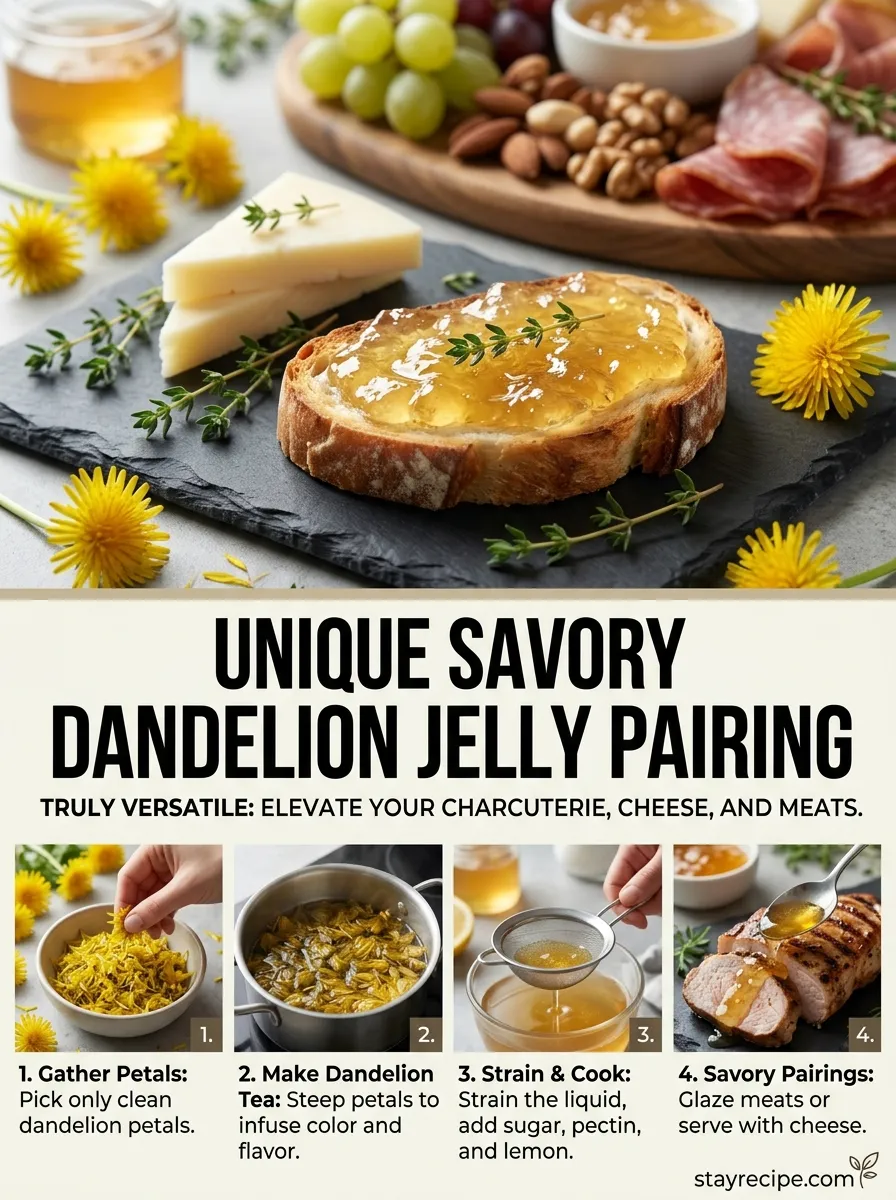
Ingredients:
- 2 cups dandelion tea
- 1 tbsp apple cider vinegar
- Pinch salt
- 2 cups sugar
- 1 packet pectin
Steps:
- Heat tea + vinegar
- Add pectin
- Add sugar + salt
- Boil, jar, cool
8. Spiced Dandelion Jelly
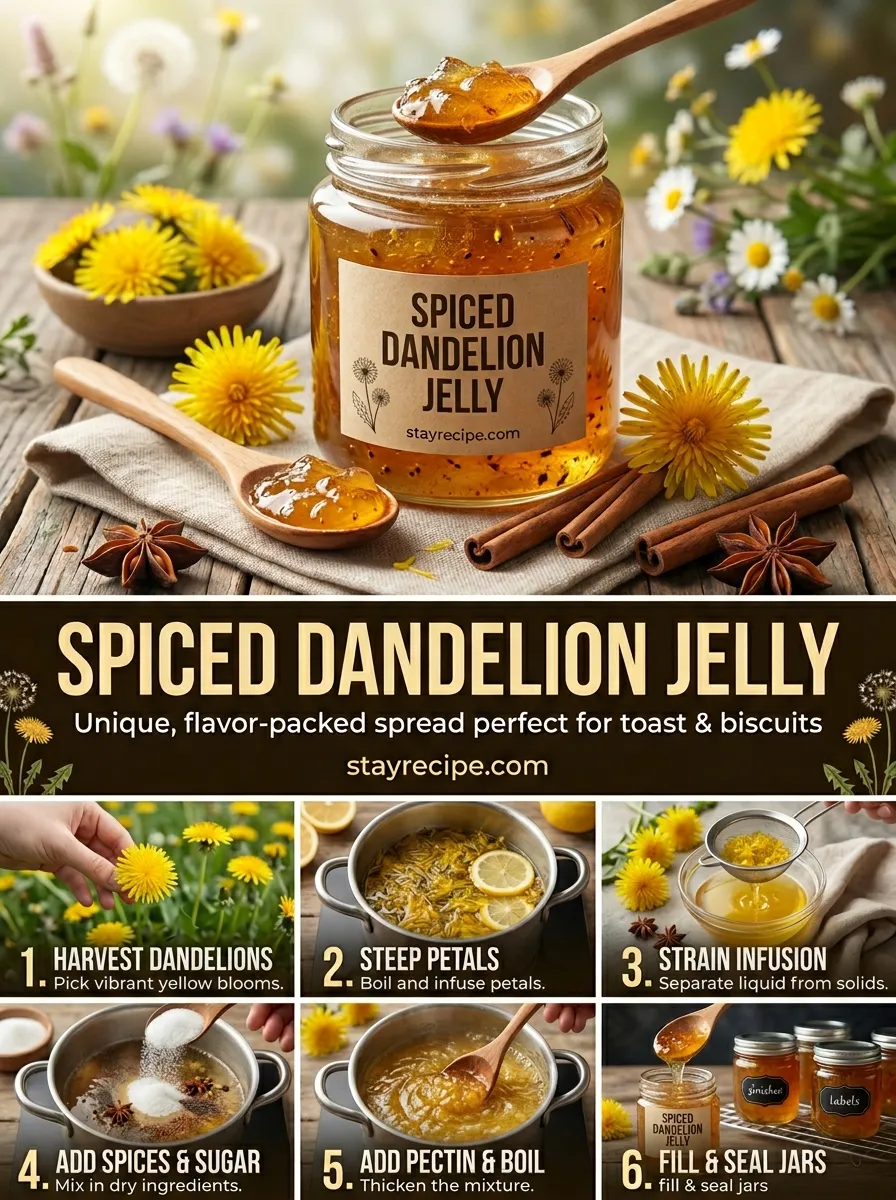
Ingredients:
- 2 cups dandelion tea
- ½ tsp cinnamon
- ¼ tsp clove
- 2 cups sugar
- 1 packet pectin
Steps:
- Heat tea with spices
- Add pectin
- Stir in sugar
- Boil and jar
9. Lavender Blossom Dandelion Jelly
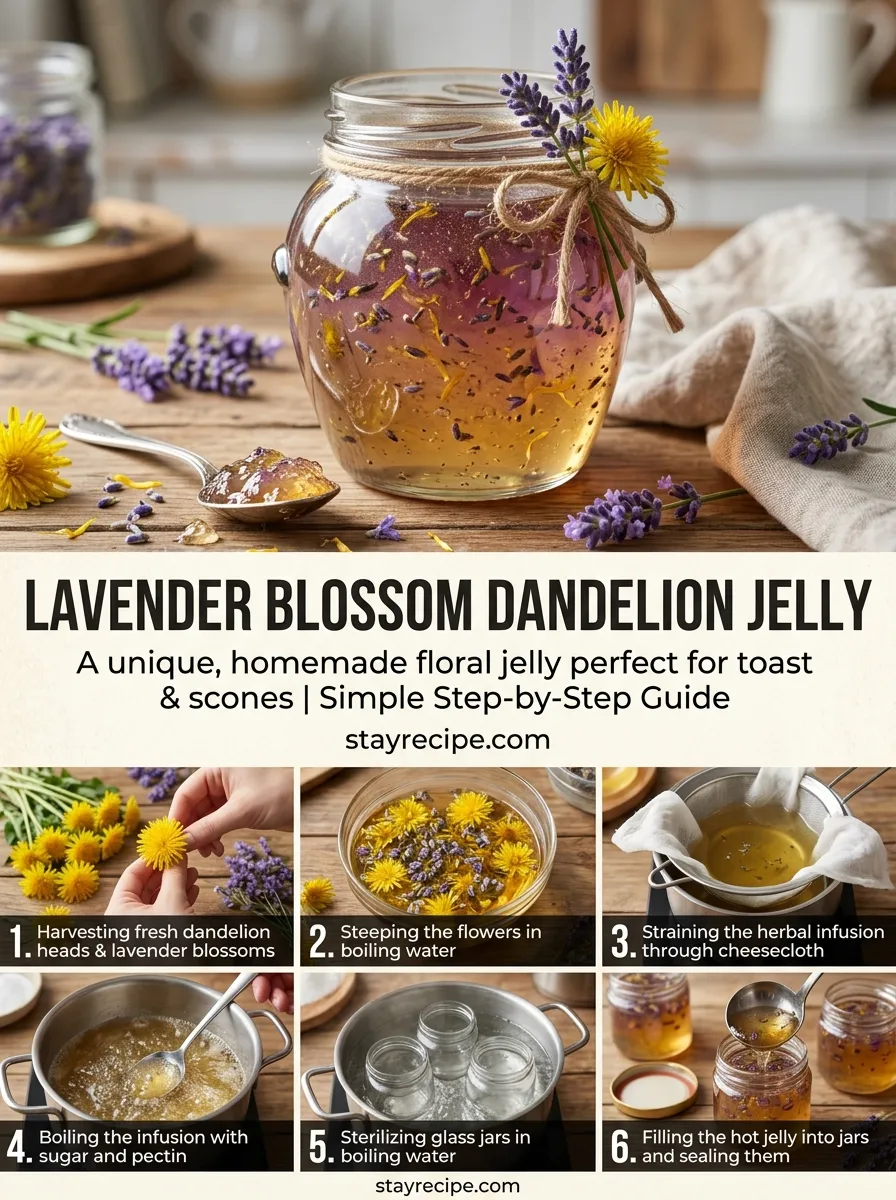
Ingredients:
- 2 cups dandelion tea
- 1 tsp dried lavender
- 2 cups sugar
- 1 packet pectin
Steps:
- Steep lavender in tea
- Strain
- Add pectin + sugar
- Boil and set
10. Spiced Delight Dandelion Jelly
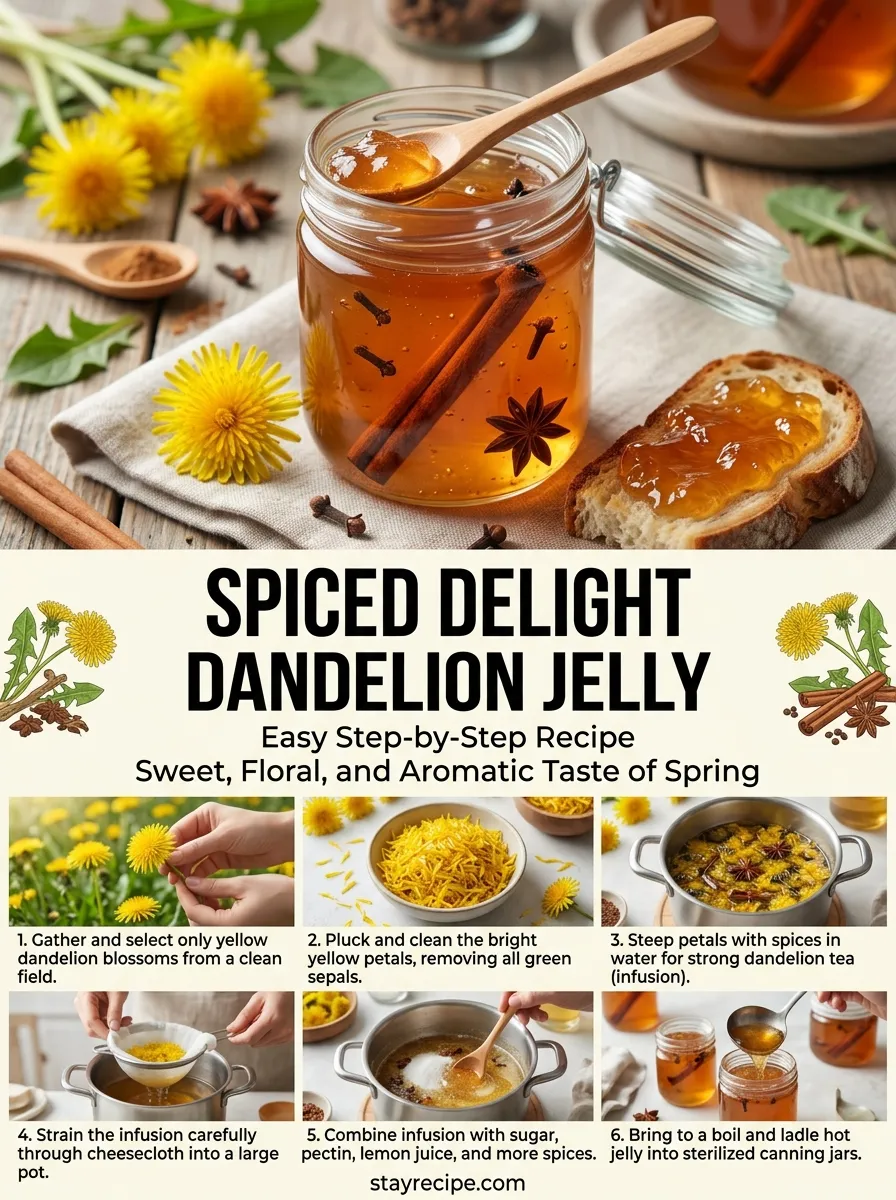
Ingredients:
- 2 cups dandelion tea
- Cinnamon stick + ginger slice
- 2 cups sugar
- 1 packet pectin
Steps:
- Simmer tea with spices
- Remove spices
- Add pectin + sugar
- Boil, jar, cool
Nutritional Benefits
- Antioxidants: High in polyphenols that help fight inflammation.
- Vitamin C: Boosted by the addition of lemon juice for immune support.
- Digestive Aid: Traditionally used to stimulate digestion and liver health.
- Low Sodium: A naturally heart-healthy condiment.
FAQ
- What does dandelion jelly taste like?
It has a sweet, floral flavor remarkably similar to honey, often with a bright, citrusy note from added lemon juice. - Is it safe to eat dandelions from my yard?
Yes, provided the area has not been treated with pesticides, herbicides, or animal waste. - Which part of the dandelion do I use?
Only the yellow petals should be used. The green base (calyx) and stems are extremely bitter and will ruin the flavor of the jelly. - Can I have an allergic reaction to it?
Dandelions belong to the ragweed family. Those with ragweed, daisy or marigold allergies should be careful; ingestion can lead to reactions that can include anything from mild irritation up to severe symptoms. - Why didn’t my jelly set?
This is common if the mixture didn’t reach a full rolling boil or lacked enough pectin. It can often be fixed by re-boiling with additional pectin and sugar. - Is dandelion jelly safe for canning?
Although many home cooks rely on a water bath, some experts (including the Wyoming Extension) recently raised red flags about a lack of approved, tested recipes because of low acidity concerns. A freezer jelly method is a safer alternative. - What ingredients do I need?
A standard recipe requires dandelion petals, water (to make “tea”), lemon juice or citric acid for acidity, sugar, and pectin. - How long does it take to make?
The process typically takes 24 hours. You must steep the petals in boiling water for 6–12 hours (or overnight) to create a strong dandelion tea before cooking the jelly. - How many dandelions do I need?
Most recipes call for 2 to 4 cups of yellow petals, which can require picking a half-gallon of flower heads. - Can I freeze the petals for later?
Yes. You can freeze cleaned petals in a freezer bag for up to 3 months or freeze the steeped dandelion tea in ice cube trays for future use. - How long does the jelly last?
Properly canned jelly can last 12–18 months in a pantry. Once opened (or if made as refrigerator jelly), it should be used within one month. - What are the health benefits?
Dandelions are high in vitamins A and C, iron, and antioxidants. Historically, they have been used to support liver and kidney health.
Final Thought
Dandelion jelly making is not just a task to be completed in the kitchen, but rather an act of reconnection with nature’s rhythms. In our frenetic lives, an hour outside in the sun collecting golden blooms is a slow-living activity that provides you with a literal taste of sunshine. This recipe is proof that you don’t need costly, store-bought fruits to make a fancy-looking preserve of good quality.
Whether you’re spreading it on a warm scone during a weeknight snack or gifting a jar to a friend, this jelly has a story of foraging and care. It questions our notion of a “weed” and invites us to get close to what’s abundant in one’s own backyard. As a new and easy do-it-yourself project, it should slot right into any kitchen repertoire. We hope this ultimate guide will encourage you to pick up a basket, step outside and begin your very own foraging tradition. After all, the best flavors often come from the most unlikely sources — and that surely includes the humble dandelion. Happy harvesting!
Leave a Reply